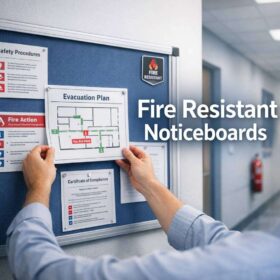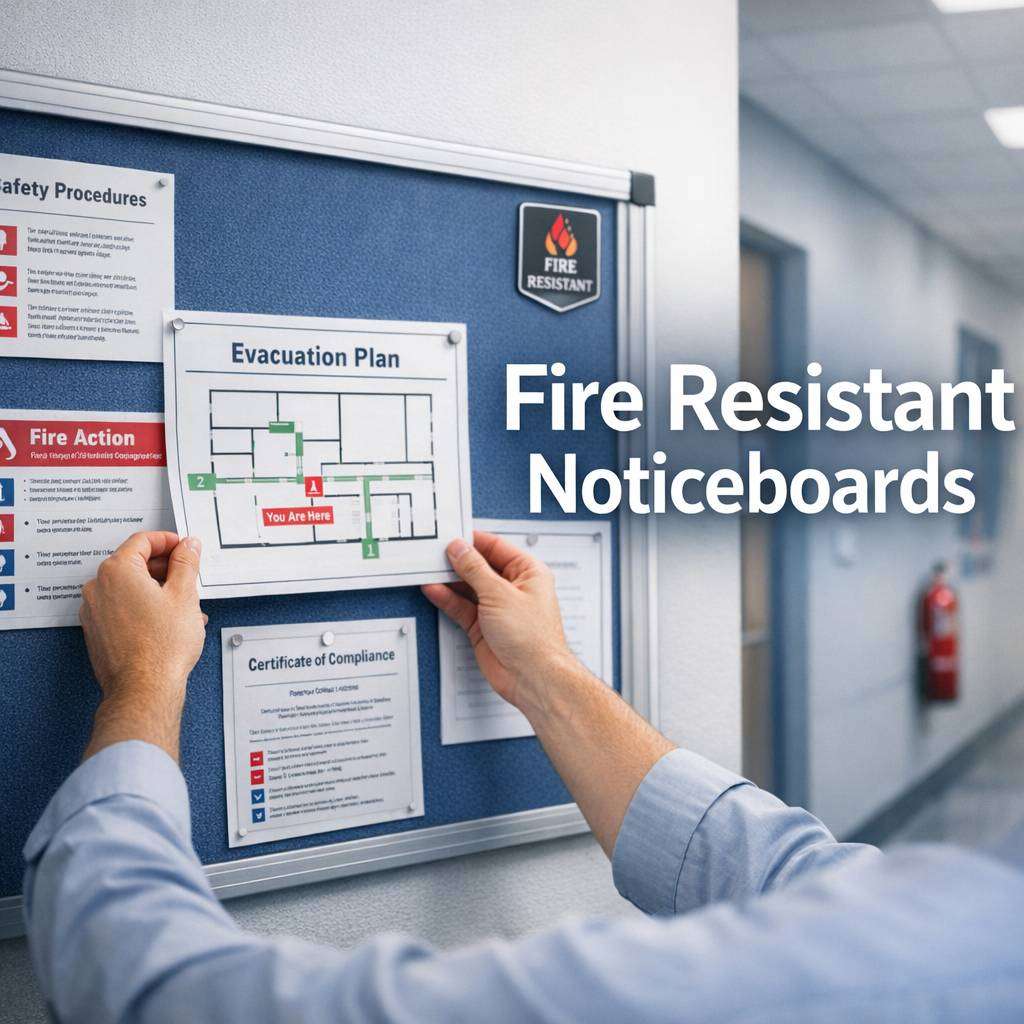
In environments where safety, clarity, and longevity matter, choosing the right noticeboards is essential. This guide outlines why fire resistant noticeboards are a prudent investment for schools, offices, hospitals, and public buildings. We will explore materials, compliance, and practical considerations to help you select flame retardant notice boards that protect information and people alike.
Understanding the Fire Safety Promise of Fire Rated Notice Boards
Fire rated notice boards are engineered to resist ignition and limit the spread of flames for a defined period. This is achieved through specialist materials and construction methods that meet recognised standards. When you opt for fire rated display boards, you gain not only a durable communications surface but also a crucial layer of protection in the event of a fire. The performance characteristics you should expect include:
- Fire resistance ratings that align with local regulations and building codes.
- Self-extinguishing or slow-burning properties to minimise smoke and hazard.
- Stable framing and reinforced edges to withstand daily handling without compromising integrity.
For organisations seeking enhanced security and accessibility, fire rated lockable notice boards offer an added level of protection. Lockable enclosures deter unauthorised posting or removal of notices while maintaining quick access for authorised staff.
Materials, Construction, and Durability
The most reliable fire proof notice boards blend strong frames with non-combustible or treated core materials. Common configurations include:
- Aluminium frames with mineral fibre cores or fire-rated composites.
- Pocketed or laminated display surfaces designed to resist warping and delamination.
- Laminate or veneer finishes that withstand frequent handling yet remain non-porous to reduce embedding of dirt and moisture.
When selecting fire resistant noticeboards, consider:
- The board’s thermal performance: ratings (for example, 30, 60, or 90 minutes) should be appropriate to the risk assessment of the space.
- The surface finish: easy-to-clean materials help maintain legibility of notices and posters over time.
- The mounting method: robust wall fixings or freestanding solutions for high-traffic areas.
In many settings, flame retardant notice boards are preferred not only for their fire performance but also for their maintenance advantages. Fire retardant display boards resist staining and fading, ensuring that crucial information remains legible even in demanding environments.
Compliance, Standards, and Practical Implementation
Compliance is a cornerstone of responsible procurement. Fire safety standards vary by country, but in the UK, organisations often reference Building Regulations, Approved Document B (Fire safety), and industry guidance for education, healthcare, and commercial spaces. When selecting fire rated notice boards, verify:
- Accreditation to recognised standards (for example, fire resistance ratings under European or British standards).
- Confirmed certifications from reputable test laboratories.
- Clear documentation of materials used, layering, and any fire retardant treatments.
Practical tips for implementation include:
- Conducting a risk assessment to identify location-sensitive areas (e.g., near escape routes, corridors, or exits) where fire rated notice boards are most beneficial.
- Installing fire rated lockable notice boards in staff rooms, reception areas, and controlled zones to protect sensitive postings while preserving accessibility.
- Establishing a maintenance routine that checks seals, locks, and hinges to prevent compromising the protective features.
By integrating fire resistant noticeboards into a broader fire safety strategy, facilities managers can improve wayfinding, communication, and compliance without sacrificing design or usability.
FAQ: Fire Resistant Noticeboards
What is a fire resistant noticeboard?
A fire resistant noticeboard is a display board designed to resist ignition and maintain its integrity longer when exposed to heat or flames. These boards are typically made from fire retardant materials or treated with fire retardants to help protect the contents and provide safer evacuation and information retention in emergencies.
Where are fire resistant noticeboards typically used?
They’re commonly installed in schools, offices, hospitals, laboratories, industrial facilities, corridors, and public buildings where important notices, emergency procedures, or evacuation maps must remain legible during a fire or heat exposure.
What materials are used in fire resistant noticeboards?
Popular materials include mineral fiber boards, gypsum-based boards, aluminum or steel frames with fire rated cores, and high-density cork or composite materials treated with intumescent coatings. Some boards may have fire retardant fabrics or laminates on the surface.
How do fire resistant noticeboards differ from standard noticeboards?
Fire resistant boards are engineered to resist ignition and slow the spread of flames for a defined period, often measured in minutes (e.g., 30, 60, 120 minutes), and to maintain legibility of notices under heat. Standard noticeboards do not have these fire performance features.
What certification or standards should I look for?
Look for certifications such as EN 13501-1 (fire classification for building products), ASTM E119/ASTM E84 (in the US for flame spread and fire resistance in some products), or local fire safety standards. Many manufacturers provide fire rating information, test reports, and third-party approvals.
How long do fire resistant noticeboards last in a fire?
That depends on the product’s fire rating and the intensity of the fire. Most rated boards are designed to withstand fire for a specified period (e.g., 30–120 minutes) to provide time for occupants to evacuate and for critical notices to remain legible.
Can notices be changed or updated on a fire resistant board?
Yes. Most fire resistant boards are still writable or printable (dry-erase, cork, fabric, or laminated surfaces). It’s important to follow manufacturer guidelines to maintain fire performance when updating surfaces or using markers and adhesives.
Are fire resistant noticeboards more expensive?
Typically, yes, due to the specialised materials and fire testing involved. However, they are a valuable investment for life safety and regulatory compliance in high-risk or public areas.
How do I maintain and clean fire resistant noticeboards?
Regular dusting and cleaning with non-abrasive cleaners recommended by the manufacturer are advised. Avoid harsh chemicals that could degrade fire retardant coatings. Check seals, frames, and fastenings for wear and ensure any signage remains legible.
Are there any installation considerations?
- Ensure the board’s fire rating matches the area’s required fire safety class.
- Use appropriate wall fixings and spacing as per manufacturer instructions.
- Consider location for visibility, evacuation routes, and proximity to heat sources or electrical equipment.
- Ensure locks or tamper-evident features are in place if required for sensitive notices.
How can I verify a fire resistant noticeboard’s performance?
Request test certificates, third-party lab reports, and installation guidelines from the supplier. Compare the board’s fire rating (minutes of fire resistance) and surface integrity with your building’s fire safety plan.
Can I customise fire resistant noticeboards (size, colour, or layout)?
Many manufacturers offer customisation options, including sizes, frame finishes, surface types (dry-erase, cork, fabric), and layout configurations to fit specific spaces and branding.
What is the typical lead time for purchasing fire resistant noticeboards?
Lead times vary by supplier and customisation level. Standard models may ship within a few days to a couple of weeks, while custom orders could take several weeks.
Do fire resistant noticeboards require maintenance training for staff?
Basic training on proper use, updating notices, and understanding fire safety labeling is helpful. Some facilities may include a brief briefing on inspecting boards during routine safety checks.
If you’d like, I can tailor these FAQs to your specific product line or audience (e.g., schools, hospitals, or corporate offices).
Fire resistant noticeboards provide durable, safety-focused solutions for urgent information in workplaces and public spaces. Durable materials, compliant branding, and clear visibility ensure effective communication during emergencies. For more options, explore displaydevelopments.co.uk in the second half.
Room-by-Room Considerations and Use Cases
- Education: Fire retardant display boards are ideal for classrooms, libraries, and common areas where announcements, timetables, and safety instructions must remain visible. Fire proof notice boards in corridors provide durable information hubs that resist daily wear.
- Healthcare: In hospitals and clinics, information boards must endure frequent handling and cleaning. Fire resistant noticeboards that tolerate disinfectants and maintain legibility are particularly valuable.
- Public buildings: Install flame retardant notice boards in lobbies, community centres, and workplaces to ensure critical notices survive in emergencies and routine circulation alike.
- Offices: For team boards and compliance postings, fire rated display boards offer a stable surface that supports varied formats while staying compliant with fire safety expectations.
Selection Checklist: Choosing the Right Fire Resistant Solution
- Determine the required fire resistance rating based on risk assessment and local regulations.
- Choose a material and finish that balances durability with ease of maintenance.
- Decide between standard fire rated notice boards and fire rated lockable notice boards based on security needs.
- Assess the vandal resistance and cleaning requirements of the chosen finish.
- Confirm compatibility with existing wall systems and accessories (branding, signage, and display accessories).
If you need a more discreet or controlled environment, consider a fire rated display boards system with modular components. This approach supports scalable information management while maintaining fire protection standards.
In practice, organisations often specify a mix of fire retardant notice boards and fire retardant display boards to create a comprehensive information network that remains legible and safe under a range of conditions. For facilities managers, the right combination can reduce maintenance costs, lower risk, and enhance overall safety culture.
If you are upgrading or replacing existing noticeboards, evaluate the current system for compliance gaps, such as outdated materials, weak seals, or non-lockable enclosures. Upgrading to fire proof notice boards that combine strong construction with reliable fire resistance can deliver long-term benefits, from reduced risk to improved user experience.
Through careful selection of flame retardant notice boards and related fire rated products, organisations can align safety, compliance, and durability in a cohesive, practical solution that supports clear communication and protects occupants.