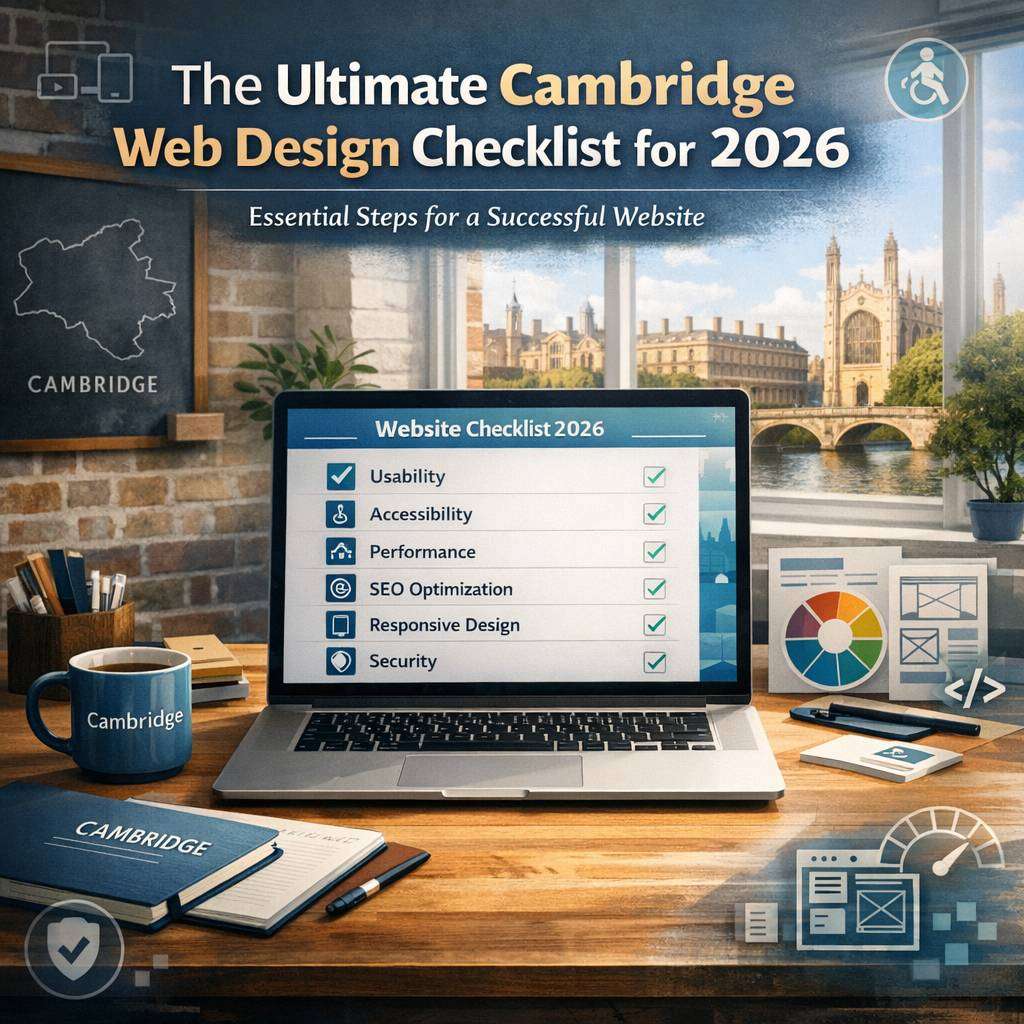
Welcome to the definitive guide for Cambridge web design in 2026. This article is crafted for business owners, developers, and marketing teams seeking a rigorous, evidence-based approach to building and maintaining high-performing websites in and around Cambridge. We will cover the core disciplines, practical steps, and industry-accepted best practices that distinguish a quality website design cambridgeshire project from the rest. By adhering to this checklist, you can align your digital presence with user expectations, accessibility standards, and commercial goals, all while reflecting the distinctive character of the Cambridge region.
Cambridge web design combines modern aesthetics with responsive functionality, delivering standout digital experiences for local businesses. A strong site builds trust, boosts conversions, and showcases services effectively. Professional teams understand branding, UX, and performance to elevate your online presence. Learn more about Cambridge web design approaches at the following link: https://www.bigdropinc.com/work/cambridge/
Strategic planning and goal definition
A successful Cambridge website design begins with a clear understanding of objectives, audience, and success metrics. Start by articulating the primary purpose of the site—whether it is lead generation, e-commerce, information dissemination, or brand storytelling. Define measurable targets such as conversion rate, average order value, or time-to-value for new visitors. Map customer journeys to anticipate user needs at each touchpoint and to identify potential friction points early in the process. This stage should also consider compliance requirements, data privacy, and long-term scalability, ensuring that the web design company in Cambridge you engage can support evolving needs without repeated, disruptive overhauls.
User research and personas
Insight-driven design rests on solid user research. Gather qualitative and quantitative data about your Cambridge audience, including local demographics, browsing behaviour, device preferences, and accessibility considerations. Develop representative personas that capture motivations, pain points, and decision triggers. Your research should inform information architecture, content strategy, and interaction design, ensuring the site resonates with visitors from Cambridgeshire and beyond while maintaining relevance for local search intent.
Information architecture and navigation
A well-structured information architecture (IA) underpins findability and usability. Clearly articulate site sections, define a logical hierarchy, and implement predictable navigation patterns. Consider a sitemap that supports both general visitors and more targeted Cambridge audiences, such as students, researchers, startups, or established businesses seeking web design services in Cambridge. A robust IA reduces cognitive load, accelerates discovery, and supports stronger SEO outcomes for terms like website design cambridgeshire and cambridge web design.
Cambridge web design services combine local insight with modern, responsive development. A strong portfolio demonstrates user-focused interfaces, fast loading times, and accessible design. For businesses seeking reliable web presence, expert support matters. Explore proven solutions and creative strategies. https:///www.doublespark.co.uk
Visual design and branding
Visual identity is the bridge between function and perception. Align typography, colour, imagery, and interactive motifs with brand guidelines while ensuring readability and accessibility. In Cambridge, where academic and tech communities are vibrant, palette and typography should convey credibility, innovation, and approachability. Ensure consistency across pages, components, and micro-interactions, so that users experience a cohesive and trustworthy online presence that reinforces your firm’s positioning as a web design company in Cambridge.
Accessibility and inclusive design
Accessibility is not optional; it is a social and legal obligation that expands your audience and improves overall usability. Design for assistive technologies, keyboard navigation, meaningful focus states, logical reading order, and text alternatives for media. Adhere to recognised standards such as WCAG 2.1 and ensure colour contrast ratios meet recommended thresholds. Inclusive design also benefits search engine visibility and user satisfaction, particularly for users with diverse needs in the Cambridge region.
Performance and optimisation
Performance directly impacts engagement, conversion, and search engine rankings. Implement performance budgets and optimise critical rendering paths. Use efficient images, modern formats, lazy loading, and proper caching strategies. A fast site improves user experience for visitors on mobile and desktop alike and supports sustainable growth for a Cambridge website design that scales with your ambitions. Regular performance testing and monitoring should be part of ongoing maintenance.
SEO foundations and local relevance
An effective Cambridge web design strategy integrates SEO from the outset. Conduct keyword research focusing on local intent and service relevance, including terms such as web design company in Cambridge, website design cambridgeshire, and cambridge web design. Optimise meta tags, headings, structured data, and internal linking. Build a content plan that addresses user queries, industry topics, and local interests. Ensure a robust technical SEO baseline with clean URLs, canonicalisation, XML sitemaps, and crawlable page structures to maximise visibility in search results.
Content strategy and governance
Content remains central to user engagement and search performance. Develop a governance model that covers content creation, approval workflows, and editorial standards. Craft content that speaks to Cambridge audiences while maintaining global relevance where appropriate. Prioritise clarity, accuracy, and value, and align content with customer journeys to guide visitors toward meaningful conversions, whether that means contacting your team, requesting a quote, or downloading resources.
Responsive design and device diversity
A responsive design approach ensures a consistent experience across devices common in Cambridge’s academic, tech, and business communities. Use fluid grids, flexible media, and breakpoint strategies that accommodate a wide range of screen sizes. Test across a representative set of devices and browsers to guarantee that layouts, interactive elements, and forms function reliably in real-world contexts.
UI patterns and interaction design
Thoughtful interaction design reduces friction and enhances engagement. Consider accessible form controls, clear microcopy, and feedback mechanisms that guide users through tasks. Use design systems with reusable components to maintain consistency and accelerate development. In Cambridge’s dynamic environment, a modular approach supports rapid updates for campaigns, events, and announcements without sacrificing quality.
Security and risk management
Security is essential for protecting data, maintaining trust, and complying with regulatory expectations. Implement a layered security model, including HTTPS, secure authentication, input validation, and regular vulnerability scanning. Establish incident response procedures and data protection measures, particularly if you handle personal information from residents, students, or professionals in Cambridge. Regular audits and updates should be embedded into the project lifecycle.
Looking for expert Cambridge web design that combines aesthetics with performance? Our team crafts responsive, user-friendly sites tailored to your goals. From branding to UX, we deliver measurable results. cambridge web design Trust our local specialists for scalable, secure solutions that boost engagement and conversions.
Content management and workflow
Choose a CMS that aligns with your team’s capabilities and goals, balancing ease of use with scalability and extensibility. Consider the need for multi-language support, accessibility features, and robust authoring workflows. A well-configured CMS empowers non-technical editors in Cambridge to keep the site fresh and accurate, while a flexible architecture supports long-term growth.
Analytics, testing, and optimisation
Data-informed decisions drive continuous improvement. Implement robust analytics to capture user behaviour, conversions, and engagement metrics. Use experimentation and A/B testing to validate design and content changes. Establish a routine for monthly performance reviews, with clear responsibilities for stakeholders in Cambridge and beyond. Ongoing optimisation turns insights into action and delivers measurable value over time.
Cambridge web design expertise drives engaging, responsive sites that convert visitors into customers. Our team blends UX, speed, and accessible code to craft memorable digital experiences. From strategy to launch, we optimize for performance and search visibility while maintaining brand integrity. Learn more about foundational terms and clear definitions here: https://dictionary.cambridge.org/da/ordbog/engelsk/web-design.
Compliance, governance, and maintenance
A sustainable Cambridge web design project includes governance and ongoing maintenance. Define roles, responsibilities, and service-level agreements for updates, security patches, and content refreshes. Ensure data handling complies with relevant privacy regulations, and maintain clear documentation of all configurations and decisions. Regular reviews help keep the site aligned with evolving business needs and market conditions in Cambridgeshire.
Vendor selection and collaboration
Choosing a web design company in Cambridge requires a rigorous evaluation of capabilities, culture, and delivery approach. Look for a proven track record in Cambridge web design and related sectors, transparent pricing, detailed project timelines, and a collaborative process that involves stakeholders from your organisation. Request case studies and references, and assess how well the vendor’s approach aligns with your goals, technical preferences, and governance standards.
Cambridge web design services blend creativity with clean code, delivering responsive sites that convert visitors into customers. Our team focuses on UX, performance, and accessible design for brands seeking reliable, scalable solutions. For linguistic precision in tech terminology, see this reference. https://dictionary.cambridge.org/fr/dictionnaire/anglais/web-app
Deployment, launch, and post-launch support
A smooth launch hinges on comprehensive pre-launch checks, including accessibility, performance, and security verifications. Plan a staged rollout to mitigate risk, and prepare post-launch support to address issues rapidly. Establish a maintenance schedule, content updates, and periodic optimisations so that your Cambridge website design stays current, secure, and effective in achieving its objectives.
Documentation, training, and knowledge transfer
Equip your team with clear documentation and practical training to sustain momentum after launch. Provide guidance on CMS usage, content workflows, and performance monitoring. A well-documented project reduces dependency on external resources and empowers local teams in Cambridge to manage the site confidently and independently.